Humans of The Summer Studio: Maki
This article was originally posted on Maki’s Medium blog.
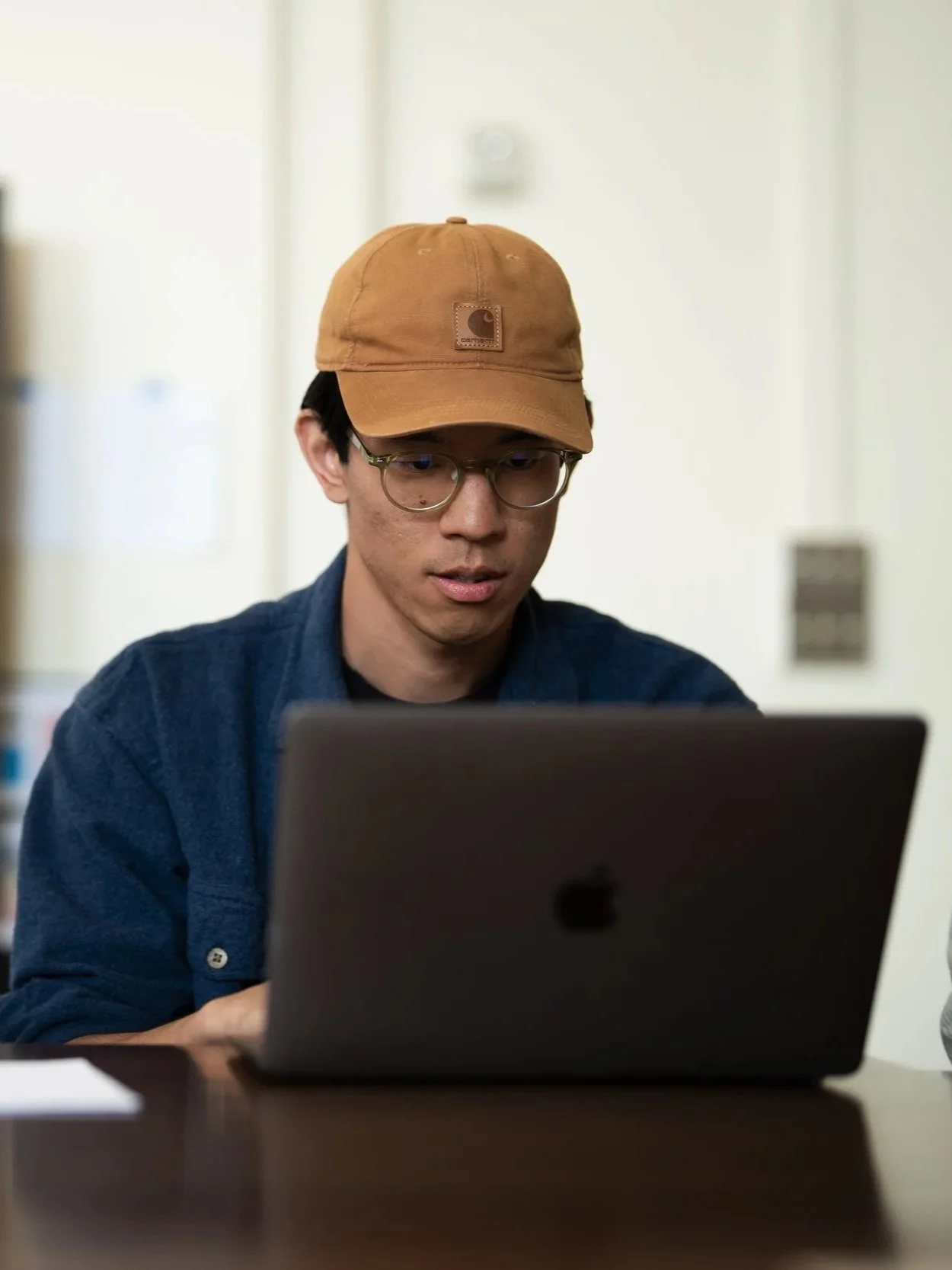
Meet Maki
First up in our Humans of The Summer Studio series- 2025 Edition: Maki!
We first met Maki several years ago in the classroom, where he was intense, curious and demanding in all the best ways. After graduating, he went on to do incredible work first at HEB Digital and then at Civilla. But Maki left to take a breather, to figure out what's next, and we snagged him during that sabbatical moment. He brought all that intensity and rigor to The Summer Studio, but now with years of real work behind it. Maki asked the questions that made everyone think harder, pushed back when something felt too easy, and never settled for surface-level understanding. That classroom energy we remembered? It had matured into something even more powerful—a designer who knows what great work looks like and isn't afraid to hold himself and others to that standard.
Hear more about his experience at The Summer Studio, in his own words and photos.
How great work is designed — a reflection on my week at The Summer Studio
Have you ever been on a team where everything just clicked? Where ideas sparked effortlessly, collaboration felt natural, and productivity didn’t feel like a grind? Teams like this can be rare — but they don’t have to be. With the right intention and design, that kind of team chemistry can be built. I learned this firsthand at The Summer Studio, a one-week intensive in Austin, Texas.
At the Summer Studio, Principal Designers who teach design at one of the best design programs in the nation come together to work on a complex client project. Joining them are Fellows — up-and-coming design leaders from some of the country’s best design organizations. They bring serious skills of their own but are there to learn the soft skills of how to lead a creative team.
I was invited to be one of the Fellows, coming in with 4 years of experience working in both corporate UX research and nonprofit civic design work. I came in with an excitement to be with amazing educators in a joyful design environment again. I left with three huge takeaways:
1. Team chemistry is designed, not found
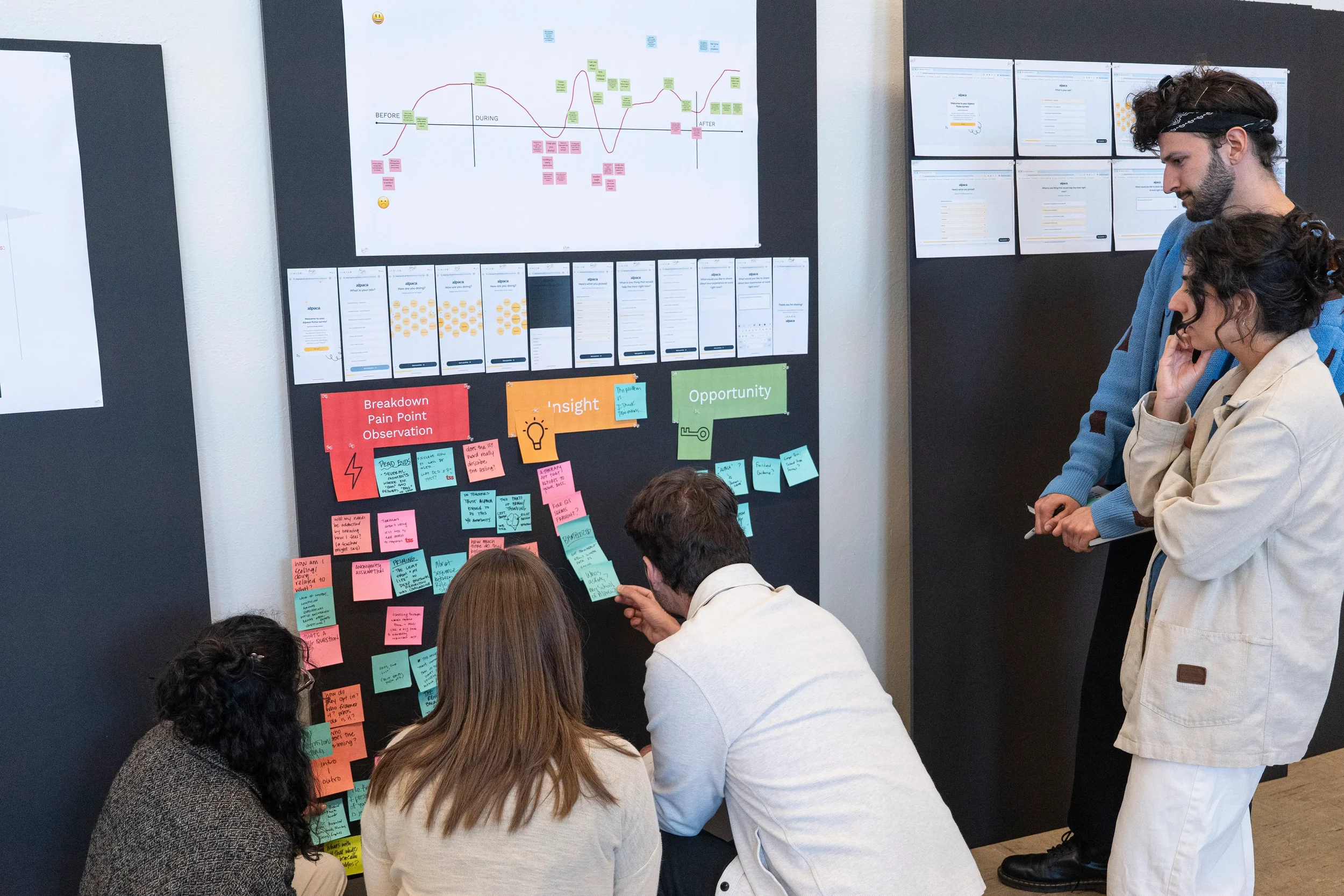
As soon as the brainstorming starts, all 6 teammates swoop in, all hands on deck.
My first “Ah-ha” moment happened in the morning of our first in-person day. The team and I had been riffing back and forth for an hour or so, almost talking over each other as new ideas and connections spilled out of us. We were building on each other, respecting each other’s opinions, and uncovering new insights together. It made me wonder “how did we get here?”. How did six strangers, in less than 48 hours of meeting each other, form such a rare chemistry?
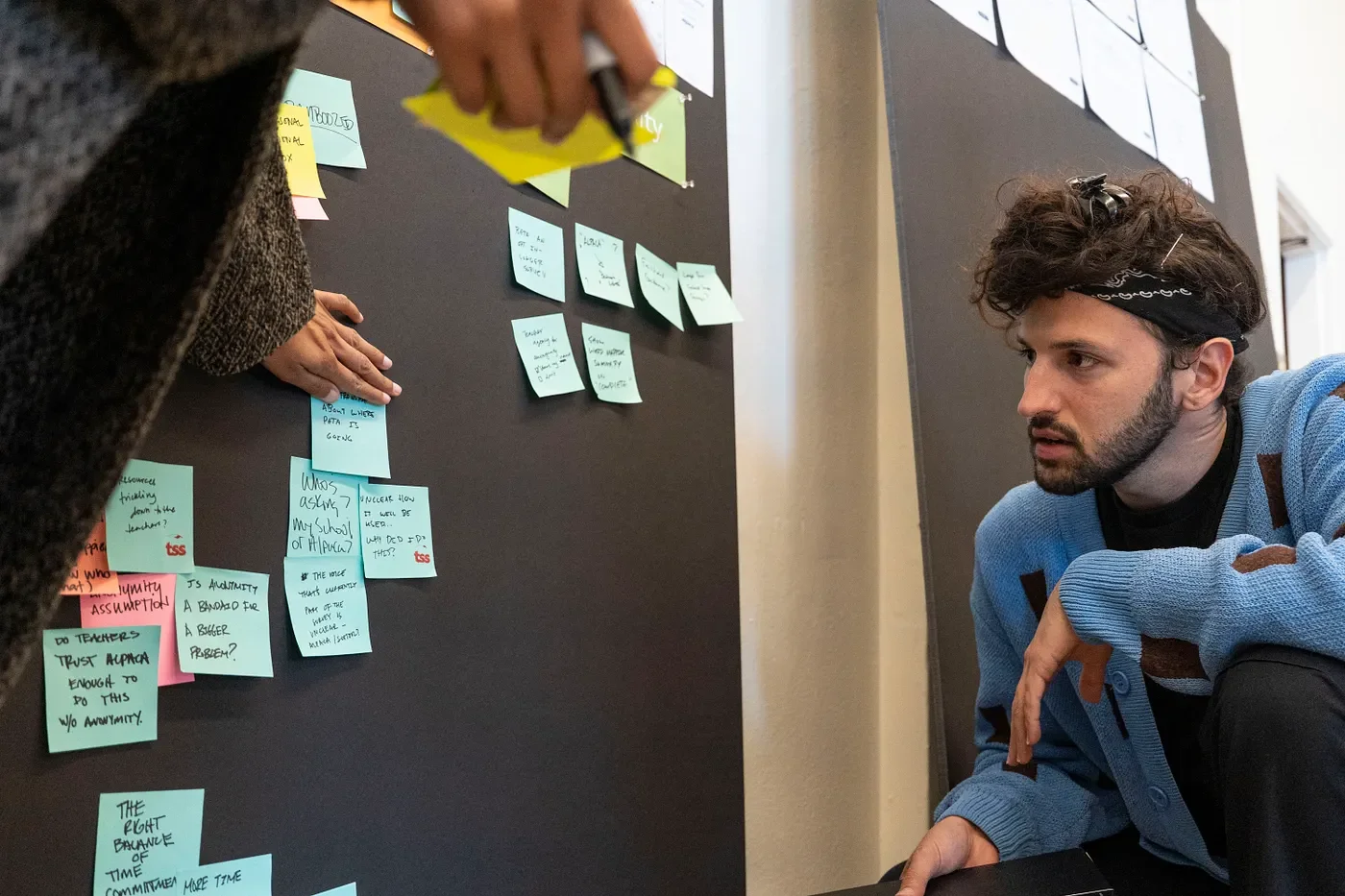
David, leaning in and making connections for the team.
It was this moment when I realized the impact of all the little things Kate and Gray had been doing since the week prior. The warm up activities to start our zoom meetings, the morning standup rituals, the team dinner before the week started, all played together so that on Monday we were fully set up to be a dynamic team.
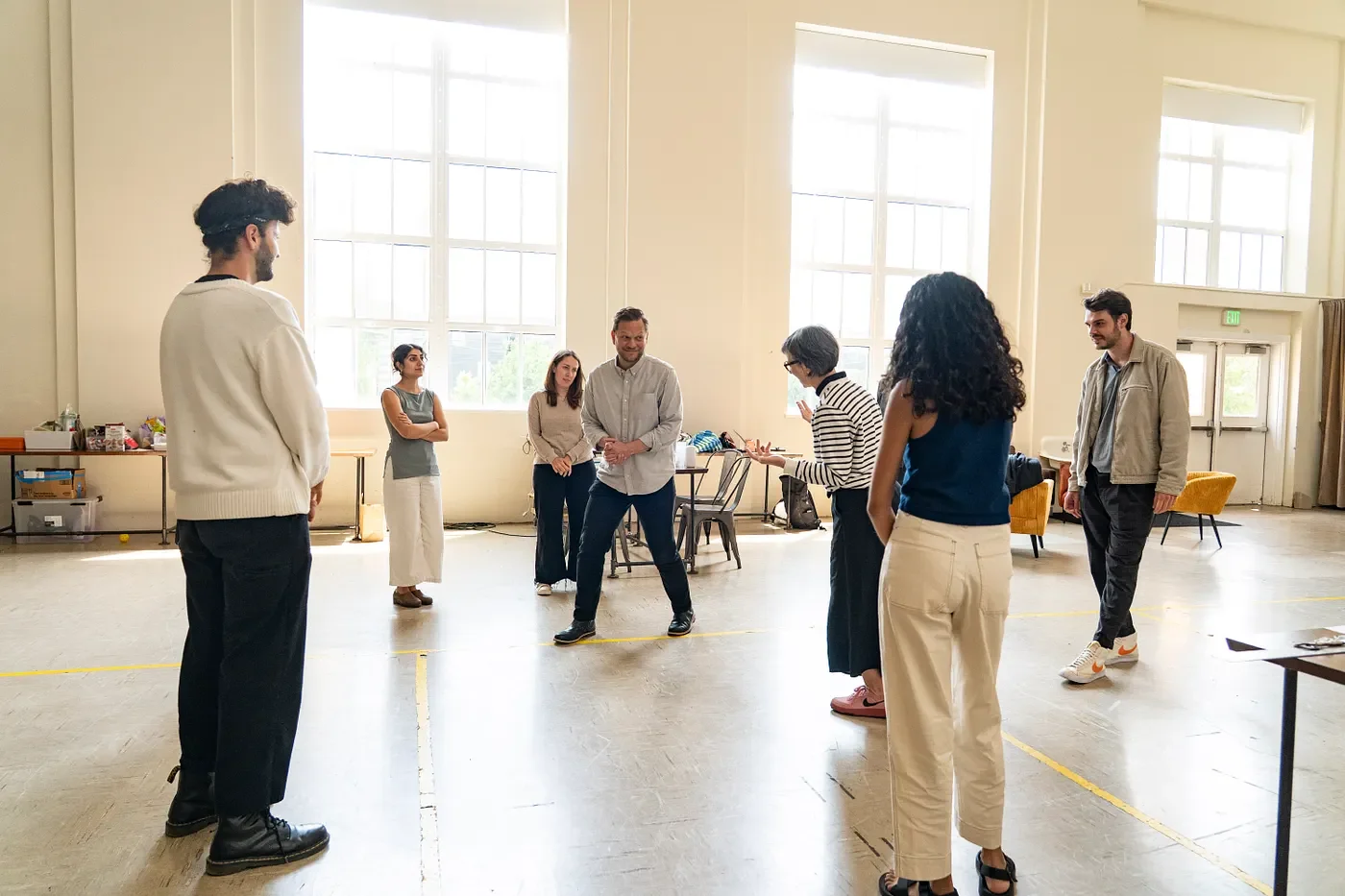
The team playing a warm up game called “Convergence”.
Because I was a part of the team I tangibly felt our teamwork building because of these practices, while those practices were being explained and taught to us throughout the week. I left feeling confident in my ability to implement those same practices in whatever teams I’m a part of next.
2. Flexibility keeps forward momentum alive
Towards the end of one of our synthesis sessions, Kelcey suggested we should take a short break, explaining that she was noticing our conversations and ideas slowing down. She also explained that as a leader, you need to be able to read the room in this way and pivot the schedule and process to keep the forward momentum of the team.
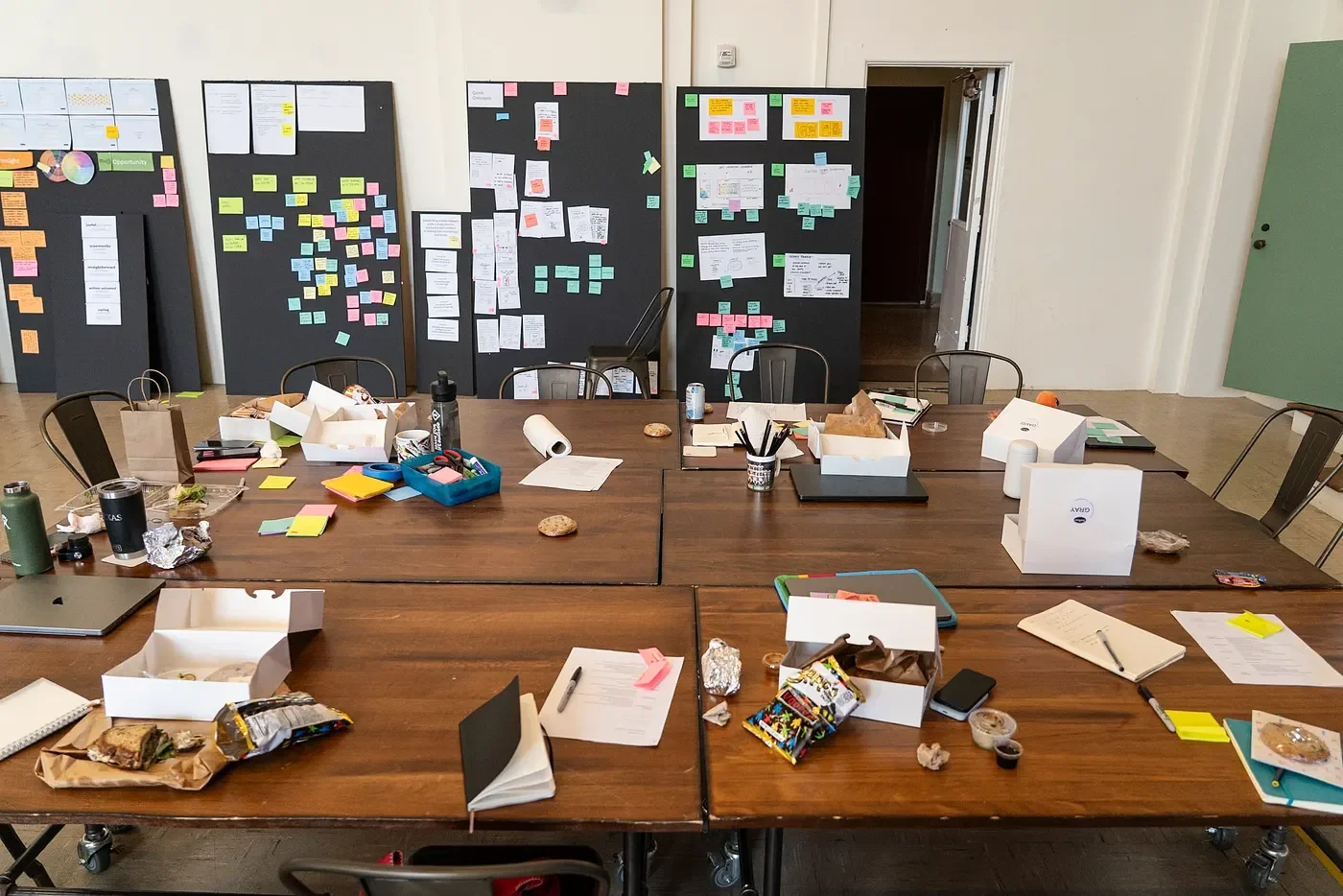
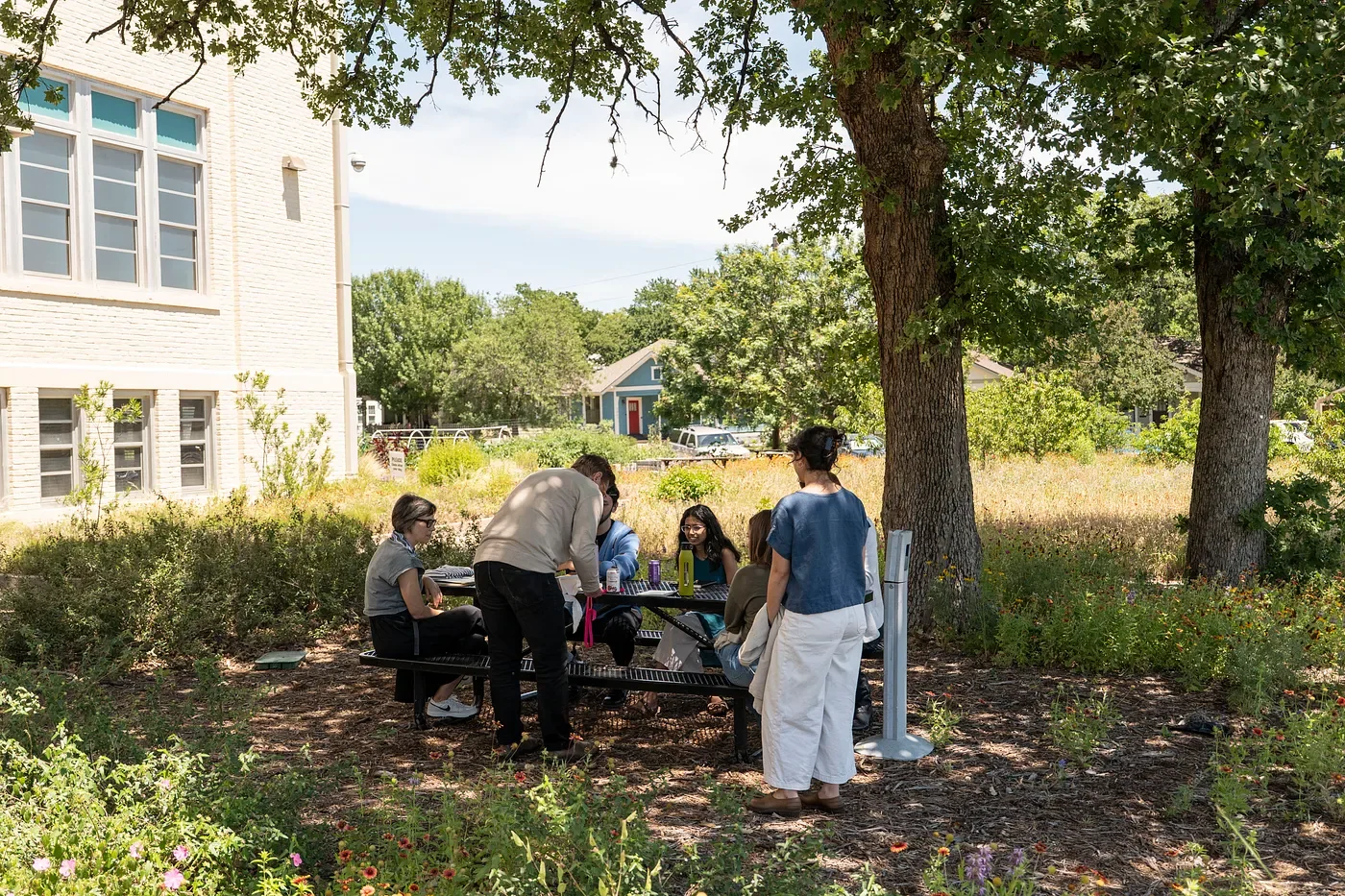
The team takes a break and heads to the courtyard after a productive morning.
Throughout the week, the principal designers had many of these pivots — changing the schedule for the day or changing the scope, medium, or the location of an activity — and at first glance they seemed like small pivots but cumulatively I felt the forward momentum and productivity of each session, without us ever feeling stuck for too long. Like Kelcey, the other principal designers also explained their thought processes for each of their decisions, unveiling what exactly they were thinking through and how they were keeping this momentum going. After my 4 years of experience in various design teams, I could immediately tell the massive impact this skill could have for my future teams.
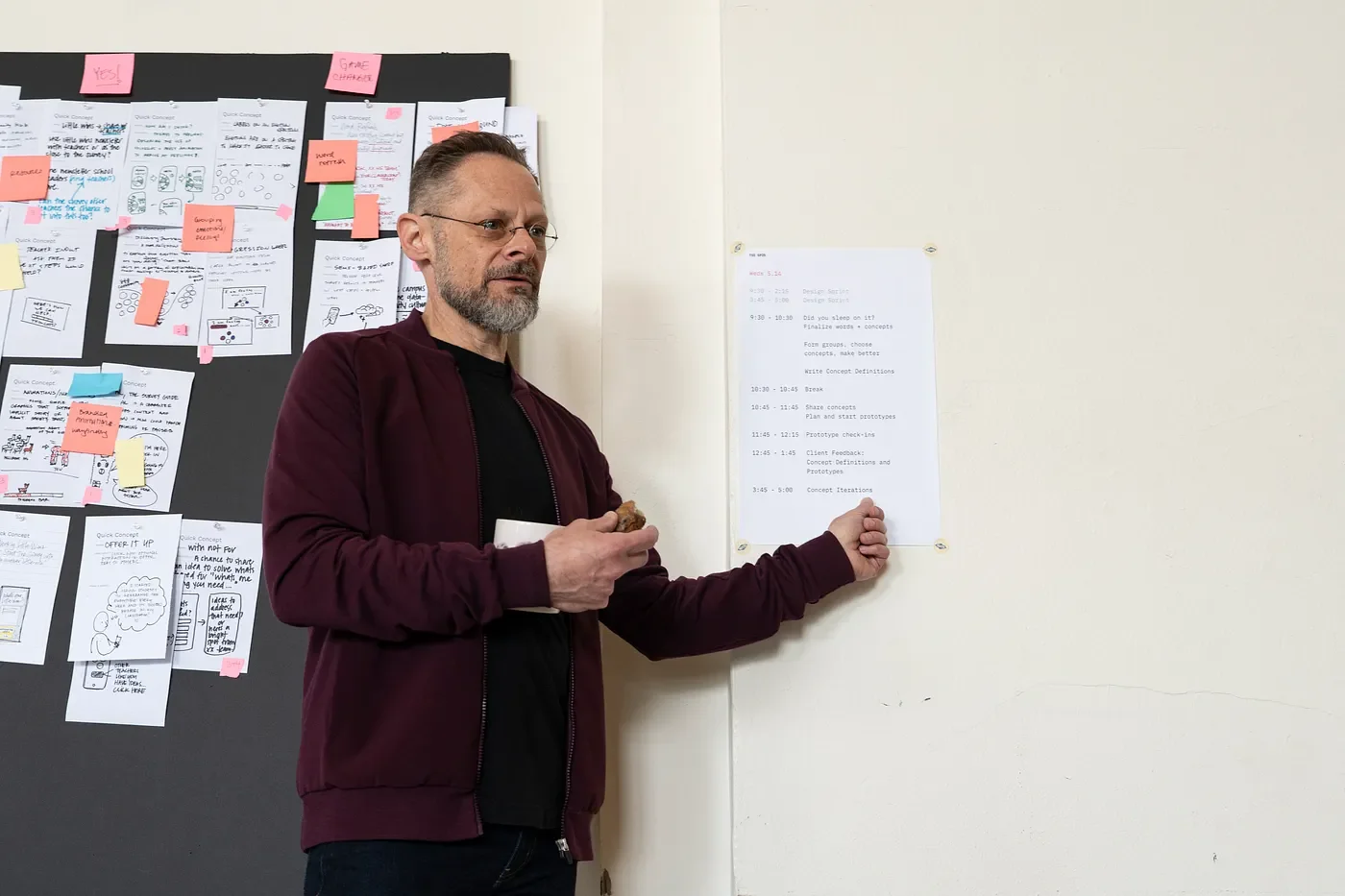
Jon, explaining the pivots to the schedule for the design session.
This also revealed to me the things I need to have awareness of when I’m in a leadership position — awareness of where we are in the design process, whether we’re steering from the project scope, the temperature of the room and the group, and more.
3. Learning how to lead with my natural strengths
This last takeaway was the most important to me; being in an environment where there was trust, safety, and teamwork allowed me to step into a fuller version of myself as a professional and as a designer. I learned that my brain is really good at coming up with frameworks to guide synthesis conversations, and that I can ask questions that help ground the project in its larger context. I’m also rather quiet, and in a design context with ideas and thoughts flooding the room, it was always difficult to accept that, but as each fellow brought their own temperaments and gifts to the table, I felt mine falling into place.
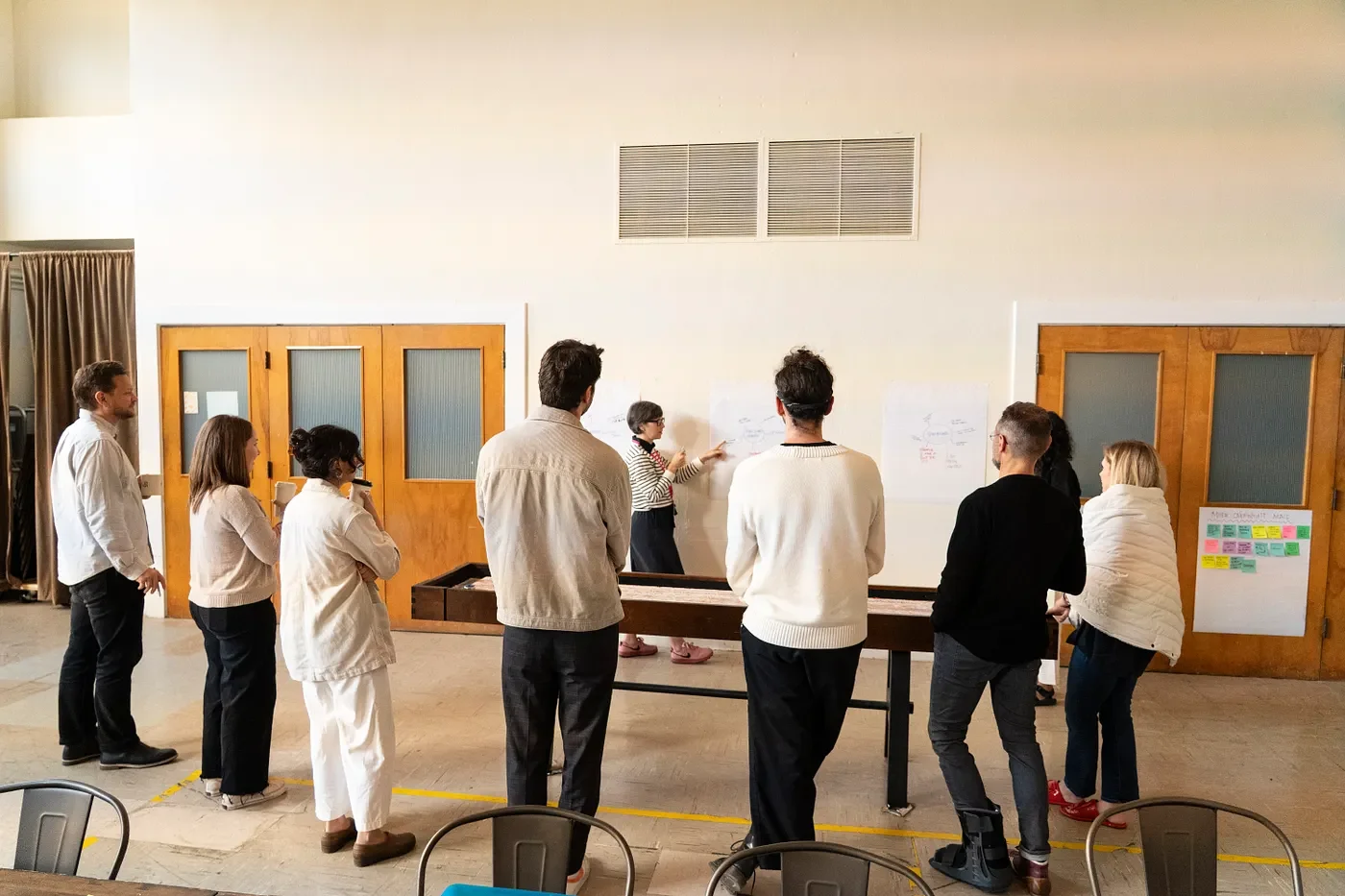
Everyone sharing at the morning standup.
The learning environment of The Summer Studio, the real-ness of the client project, and the carefully curated teamwork and mutual respect helped me see more of my unique talent as a designer and professional, and I left feeling confident in what I have to offer to any future team.
I realized afterwards that these three types of awareness — awareness of the team, process, and myself — helps me feel much more confident going into any new team or design project in the future because I know specific practices to help navigate difficult moments in a team, I know how to steer a team through the design process, and I know the unique talents and strengths I bring to the table.