
Humans of The Summer Studio: Isabel Alexander
This article was originally posted on LinkedIn, check it out here.
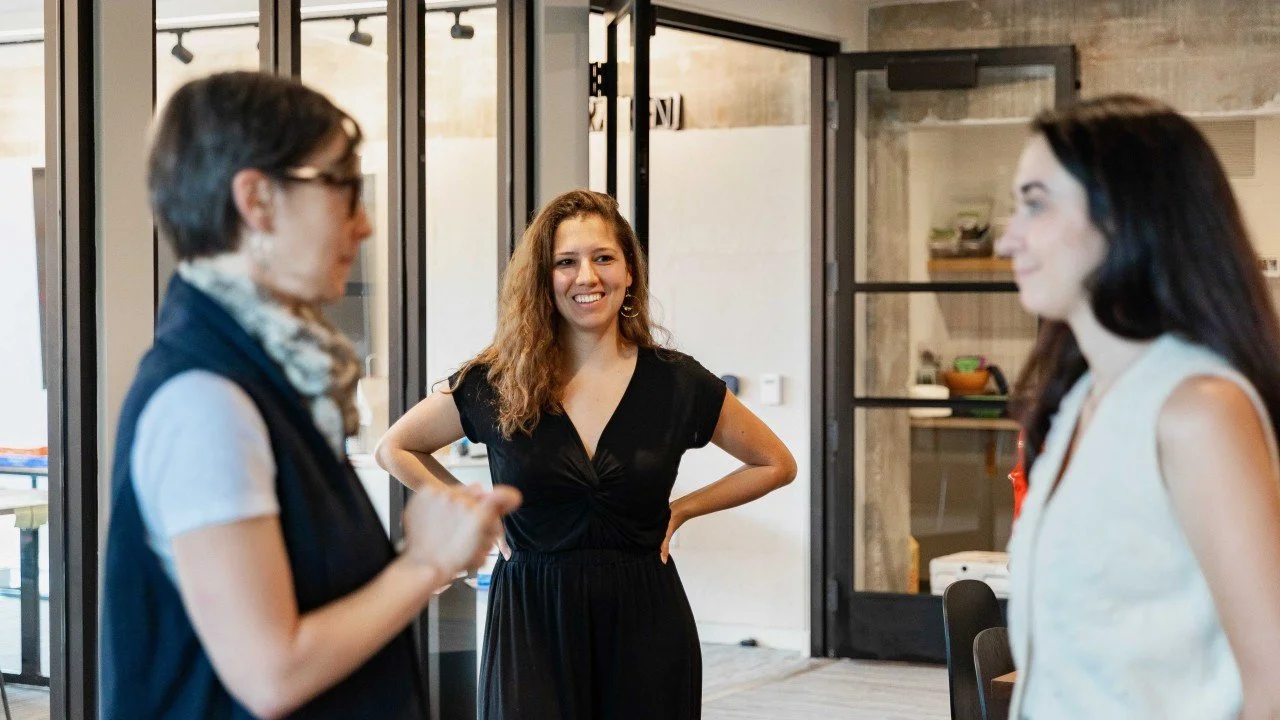
Meet Isabel
Next up in our Humans of the Summer Studio series: Isabel Alexander
Isabel is a brilliant designer who brings together the precision of a researcher, a deep knowledge of healthcare, and a sharp design intuition to create a powerful, purpose-driven practice.
She’s currently an Innovation Associate at MD Anderson Cancer Center and a proud graduate of the M.A. in Design focused on Health at The University of Texas at Austin.
What makes working with Isabel such a joy is her deep curiosity—not just about how to design better, but about why we do what we do. Her thoughtful questions invite reflection and help surface the often-unspoken ideas behind our work.
She’s a warm, grounding presence and a deeply empathetic researcher, always attuned to the human experience at the heart of every challenge.
You can check out Isabel’s work here.
1. What did it feel like to get hands on during the Summer Studio week in Austin last year?
It was a much-needed digital detox. At a time when virtual collaboration was the norm, it was so refreshing to spread our ideas across tables, rearrange them on walls, tear them up, and try again. By the end of the week, the space around us told the story of our process. When our client joined for a final workshop, our scraps weren’t something we needed to clean up—they were a roadmap that explained how we arrived at our solution.
2. What do you think future fellows should know about the week?
The Summer Studio offers a unique opportunity to learn from the inside out. As participants in a thoughtfully curated experience, we were both the makers and the recipients of design. One of the books we read, The Art of Gathering, explores how to create purposeful, inclusive, and engaging meetings. This can often be achieved through “threshold” moments: symbolic and literal entrances into a new space or mindset. The Summer Studio was a perfect example of this—whether it was setting clear expectations through virtual pre-meetings or leveraging physical space to guide shifts in focus. In many ways, The Summer Studio is a microcosm of the very curriculum that it teaches.
3. Were there any surprises?
The power of ritual and reflection. Each day began with an exercise called "overnight mail"—a quiet journaling session followed by pinning our reflections on the wall. At first, I wondered if we’d run out of things to say. But I was surprised at how much there was to unpack—whether it was specific feedback on our client project or broader musings about our craft. This meditative practice helped center us and align our thinking before diving into work each day.
4. What does it mean to you to be a designer today?
To me, being a designer means stepping into complex spaces with humility and curiosity. We aren’t necessarily experts in a given field, but we’re skilled at drawing out insights from those who are. Often, people deeply immersed in a system become accustomed to its challenges and inefficiencies, accepting them as the norm. Through research, facilitation, and synthesis, designers can help surface those friction points and open up new possibilities. Good design is just as much about understanding the current state—what’s working, what’s frustrating, and what matters—as it is about introducing something new.
5. Is there a piece of advice or wisdom that you would tell your younger designer self?
With technological advances, humans will be able to produce at an unprecedented (sometimes dizzying) speed—but that doesn’t mean we should rush into every opportunity. As designers, we must push boundaries when it makes sense, but also know when to press pause. Design has the power to unite or to divide; to help or to harm. In today’s fast-evolving landscape, it is crucial to build ethically and mindfully, especially considering the potential for scalability and unintended consequences.