
Humans of The Summer Studio: David
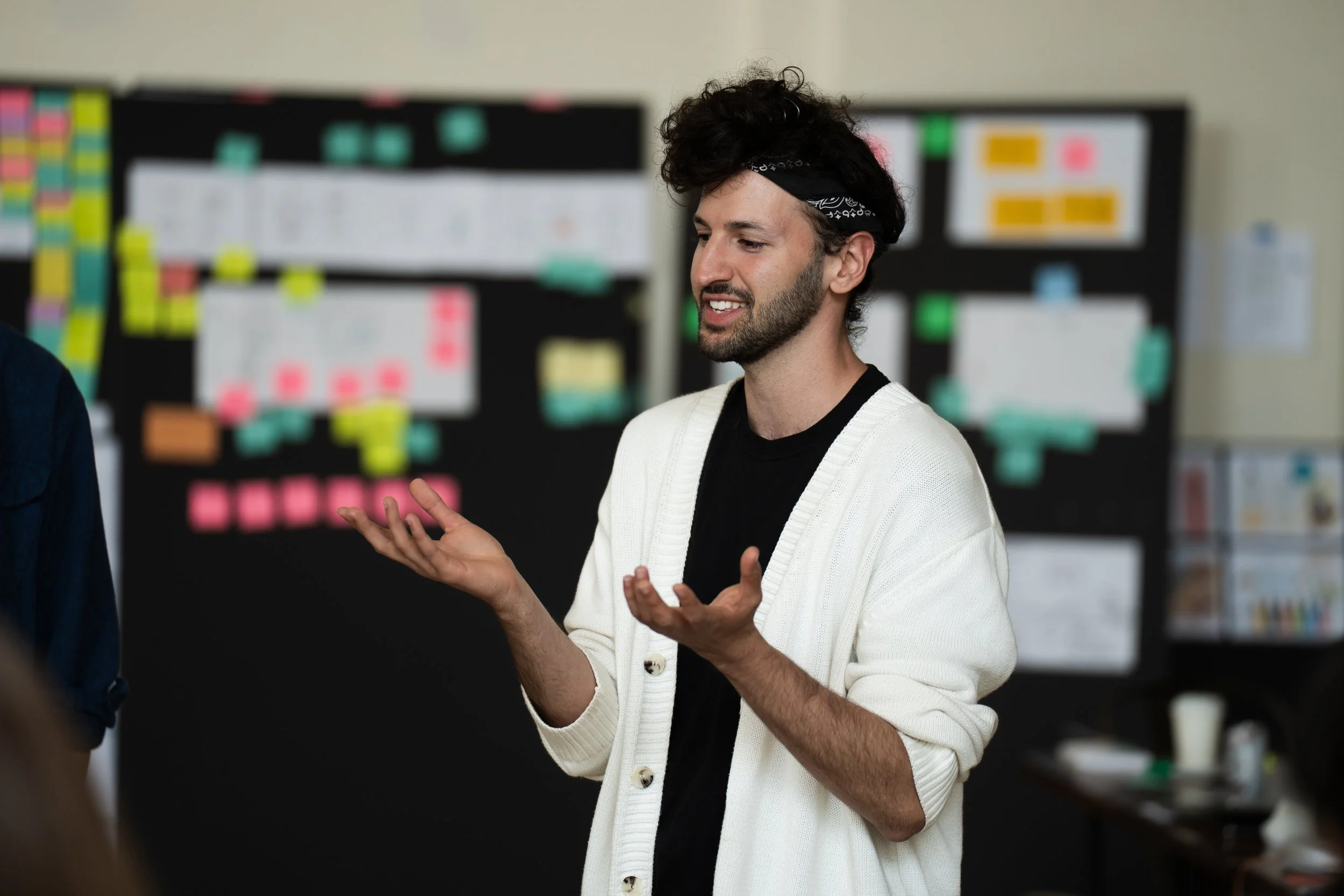
Meet David
Next up in our Humans of The Summer Studio series- 2025 Edition: David!
David is an Academic Technology Specialist focused on UX research and product management at The University of Texas at Austin, but we knew him first as a colleague in admissions. Back then, we'd watch him in meetings and think: this person sees people. He had this way of making everyone feel like they belonged in the room. So when we heard David was ready to go deeper into facilitation and design, it made complete sense. He showed up to The Summer Studio with that same generous presence. David's human-centered approach isn't something he performs; it's just who he is. You could see it in how he'd check in on quieter voices during group work, how he'd reframe a tense moment with curiosity instead of defensiveness. May we all have a David in the mix.
Hear more about his experience at the studio below.
Creating my own Cafetorium at The Summer Studio
Remember cafetoriums? Those magical spaces from elementary school: part cafeteria, part auditorium. Where you ate breakfast after getting off the bus, attended a back-to-school orientation, and maybe, if you were lucky, starred as Papa Bear in your first-grade Christmas play (I lost out on the lead Santa role, but that casting decision turned out for the best).
This was the setting for my experience at The Summer Studio in May 2025. Housed in the historic Baker School in central Austin, I joined five other Design Fellows for an intensive week-long design studio experience that made me rediscover the magic of in-person collaboration. What I didn't expect was how this cafetorium would become a metaphor for everything I'd learn about creative leadership.
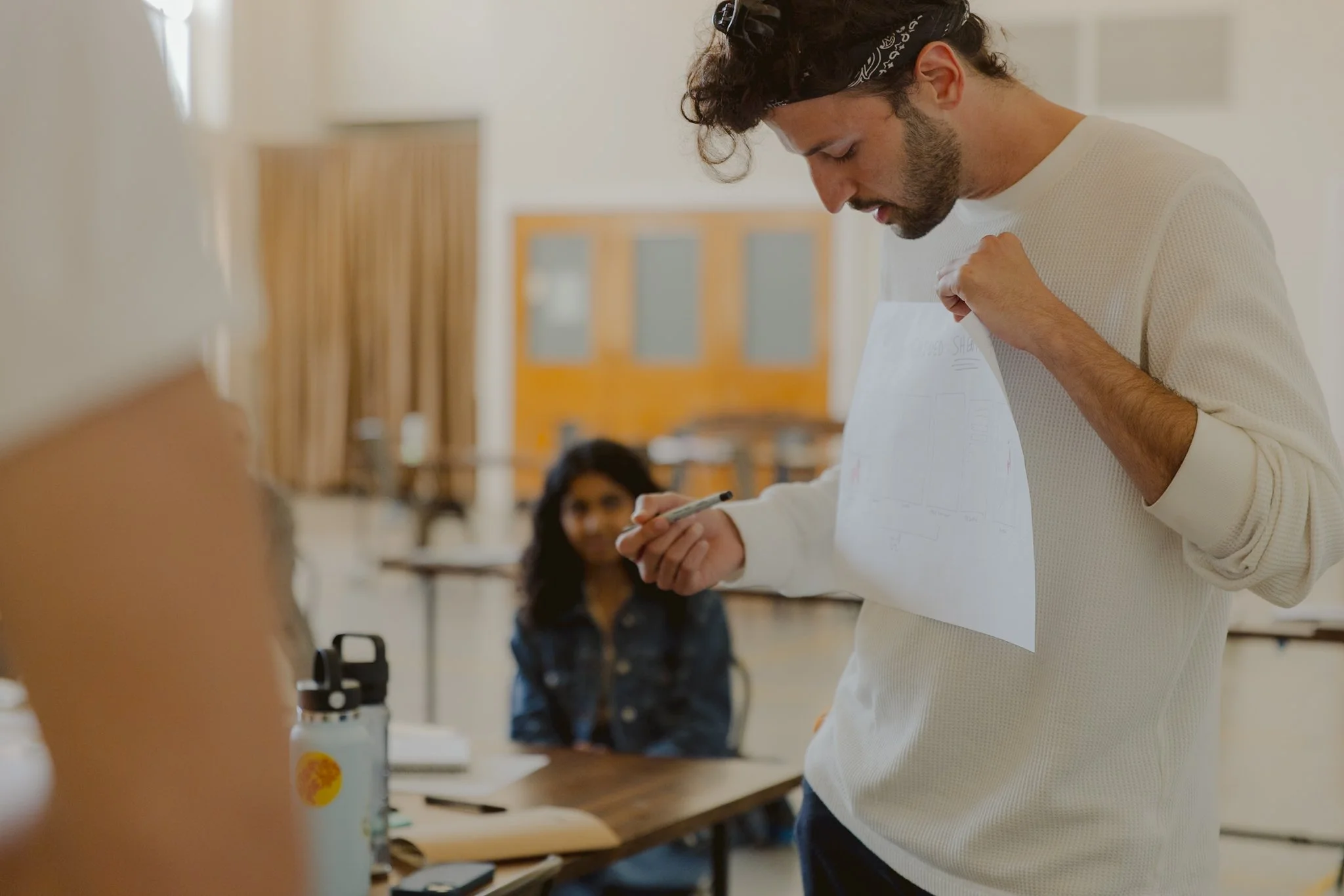
Standing up in the cafetorium, testing ideas in front of the Fellows.
When Imposter Syndrome Almost Won
I had been following Kate Canales and Gray Garmon's LinkedIn posts about the first iteration of The Summer Studio for months, and it seemed incredible. Honestly, I considered reaching out to express interest, but as someone early in their design career journey, imposter syndrome crept in hard. I told myself, "Maybe in a few years."
Weeks later, my boss mentioned she wanted to discuss a professional development opportunity in our one-on-one. Kate and Gray had reached out to her about the Design Fellow opportunity and asked if she would support me attending the summer 2025 cohort. I was shocked. They wanted me? I was flattered, stoked, and, if I'm being honest, a little terrified. As someone who didn't follow a traditional pathway to become a designer, I worried I wouldn't have the "chops" to contribute alongside my fellow Design Fellows (who, no surprise, were amazingly talented).
“They think I’m ready. My boss thinks I’m ready. Now I have to think I’m ready.”
So I said yes and put in my PTO request for May.
The Magic of the Cafetorium
I didn't even know The Baker School existed before the Studio (odd since I'm local to Austin). But the place absolutely rocked. Our studio space for the week took place in the historic school's actual cafetorium, a repurposed space that gave me that nostalgic Magic School Bus time-travel trip back to the endless creative possibilities of elementary school.
We would eat there. We would play there. We would add a little design theatre to the work: warmups, standups, design crits, client presentation prep. We constantly rearranged the space to fit what we needed it to be in that moment. That adaptability summed up a big takeaway from The Summer Studio: learning to rearrange the "room", and myself, depending on what the task required.
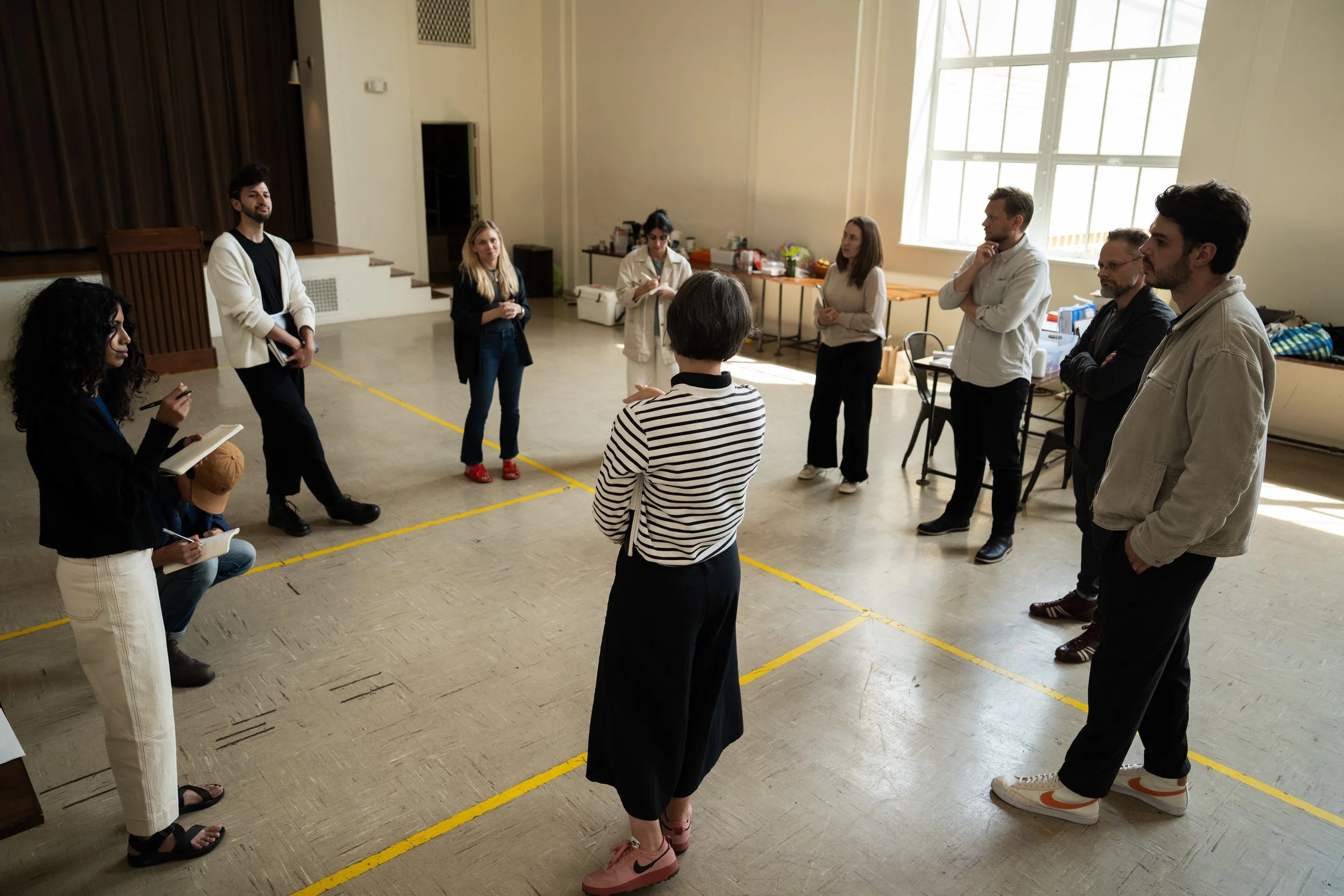
The cohort practicing some facilitation
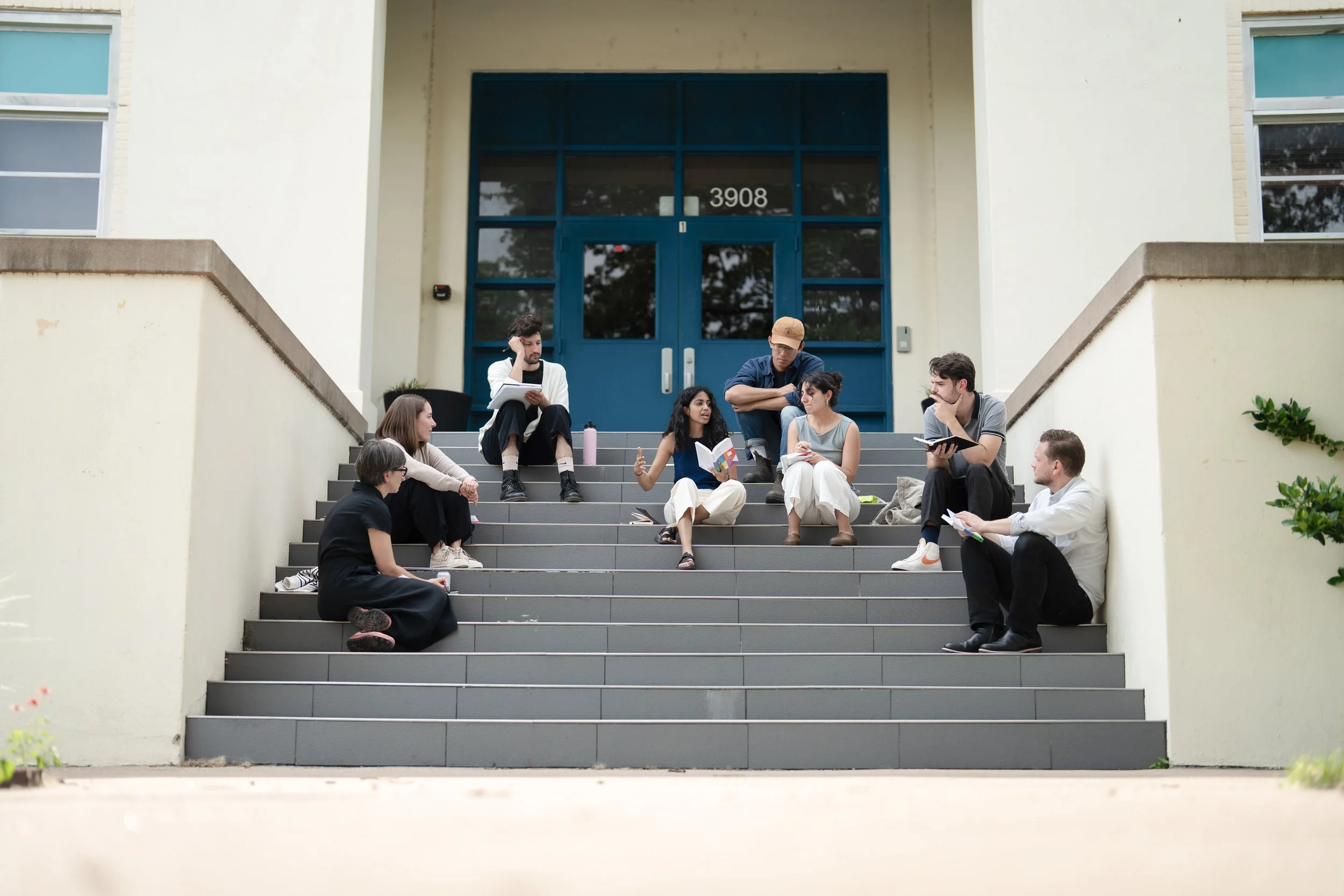
Leadership layer break, discussing the day’s readings
A Culture Built in Days
It's shocking how quickly we all developed a bond, creating a group culture dynamic and learning how to best work with each other. This is a testament to the "leadership layer" curriculum and intentional experience design of The Summer Studio itself. The organizers were dog-fooding their own curriculum, showing us how they used the lessons of psychological safety and gathering design in the curation of the studio experience and client project. This was something we could take and replicate for our design work and colleagues back at our regular nine-to-fives.
It's remarkable what a group of ten strangers can accomplish in one week when given three critical ingredients: a super dope project and client, a super dope space to creatively collaborate, and super dope people to learn from and create with.
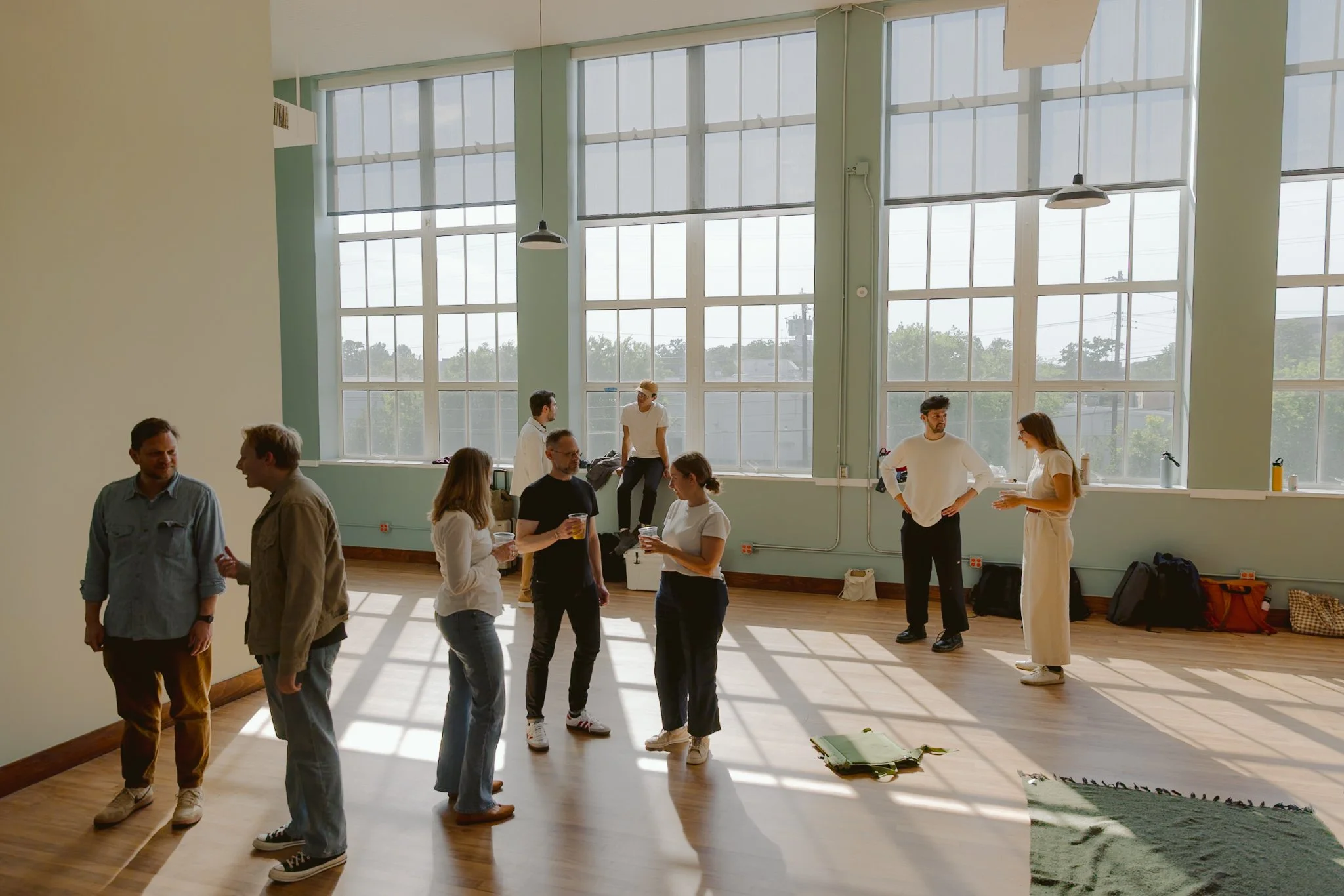
Getting to know the client team
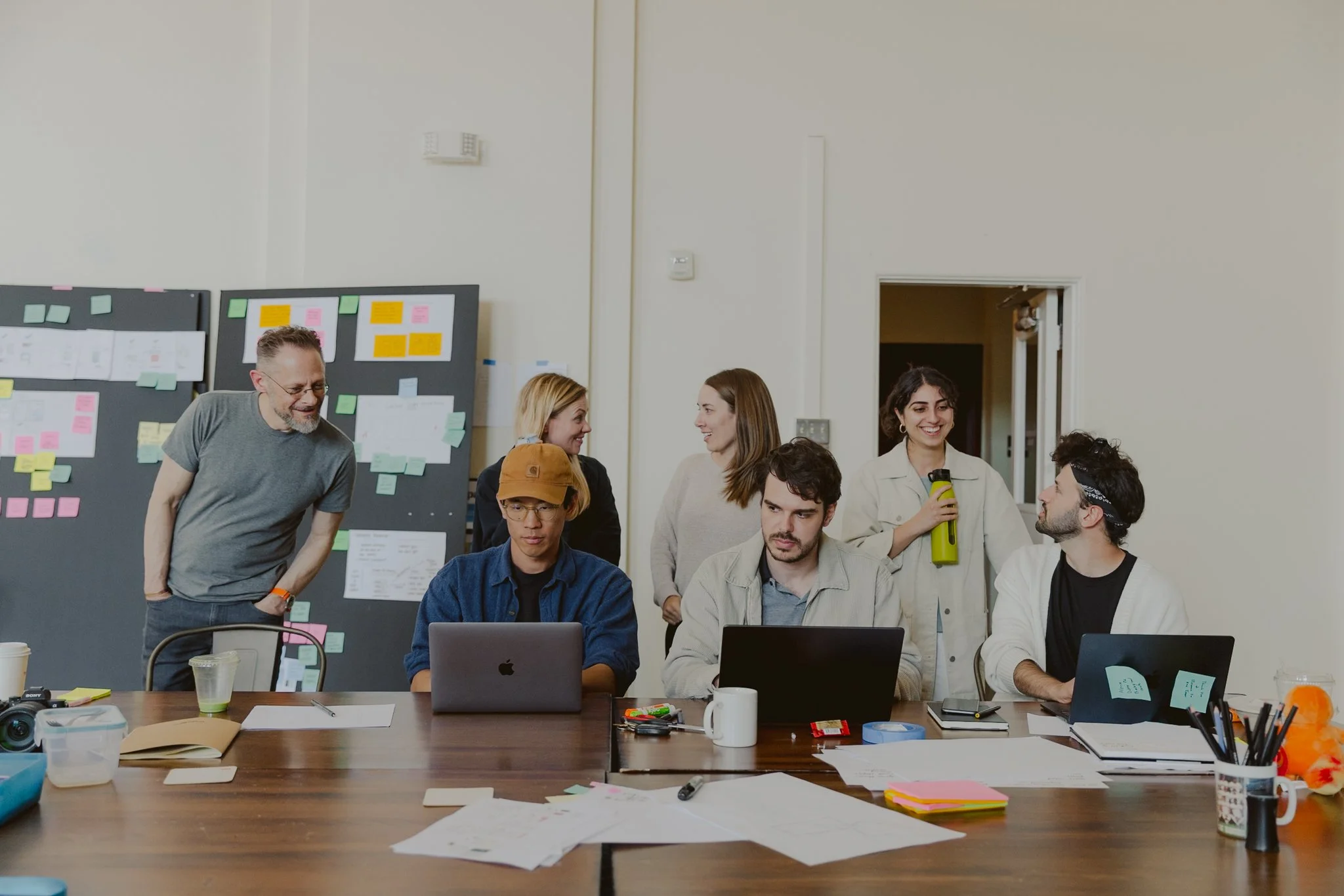
Collaborating with my fellow Fellows
Packaging the Experience
At the closeout of The Summer Studio, the facilitators held intentional one-on-one sessions for each of us Fellows to reflect on the experience and discuss how we might "package" our takeaways to use at our organizations and with our teams. I couldn't shake the concept of "The Cafetorium," so I decided to run with it.
Through a helpful conversation with Kate and Gray, I crafted my own personalized facilitation and project management system called "The Cafetorium". It's comprised of various "Legos," deployable activities learned at The Summer Studio such as "Designing the Alliance," "Overnight Mail," and "Crafting a Get Smart Document," that I could easily use across various work projects. Plug and play.
I also added "Play-Doh," conceptual frameworks that I could contextualize and mold to fit my strategic projects. And to make it a bit more designerly, I vibecoded a site hub to house all of these resources, and I've been building on it for months since.
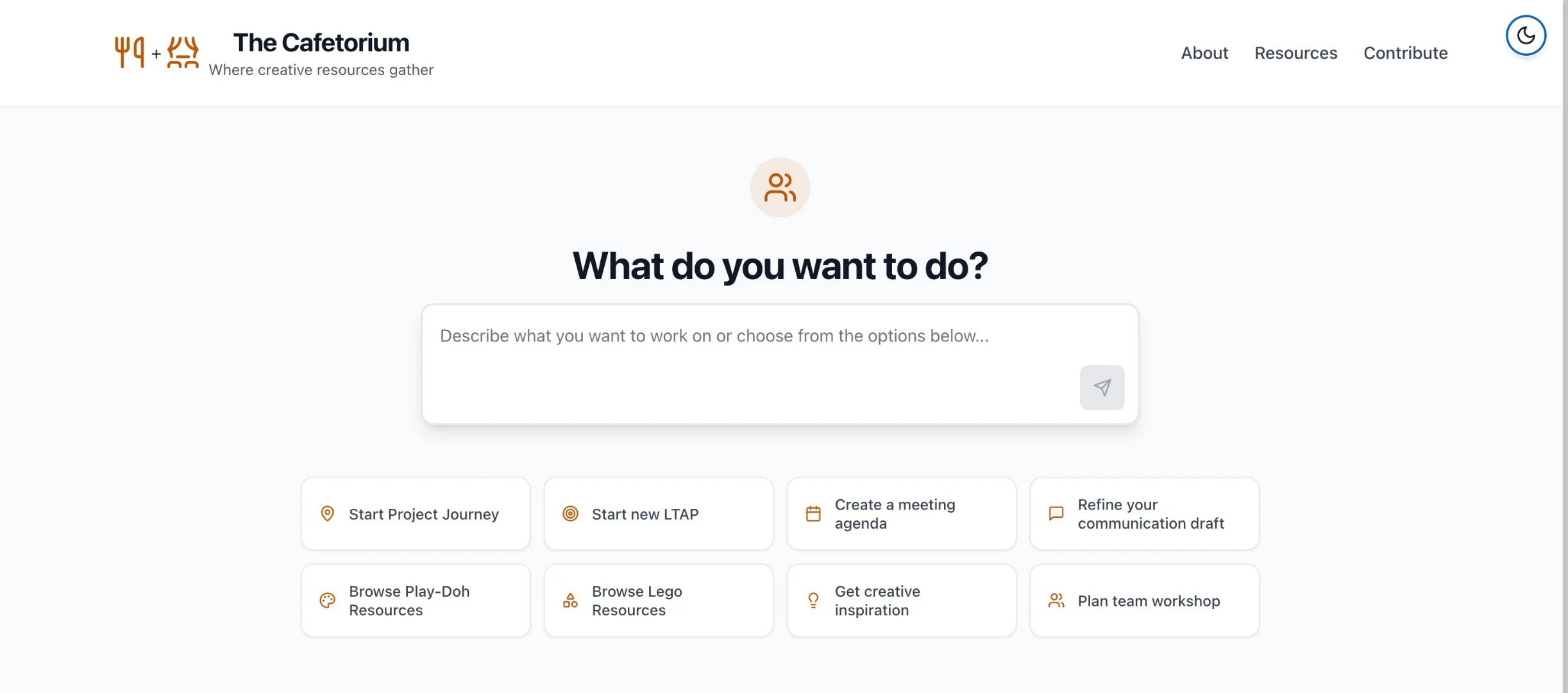
The Cafetorium hub became my digital version of the space—where creative resources gather.
Bringing It Back Home
Within weeks, I had already begun demoing and using the "Get Smart" activity with my team at The University of Texas at Austin to prep us for our summer team retreat. I also deployed that framework alongside "Quick Concept" and "Findings Forms" to lead a four-hour design sprint with a cross-functional leadership team at UT Austin. All my seniors by a longshot, mostly non-designers.
Without my experience at The Summer Studio, I don't think I could have easily jumped into those creative leadership roles armed with my Legos and Play-Doh. But the creative experience and the boost of confidence afterwards gave me the fuel I needed to "manage up," a concept many designers can resonate with who work across complex projects and work ecosystems.
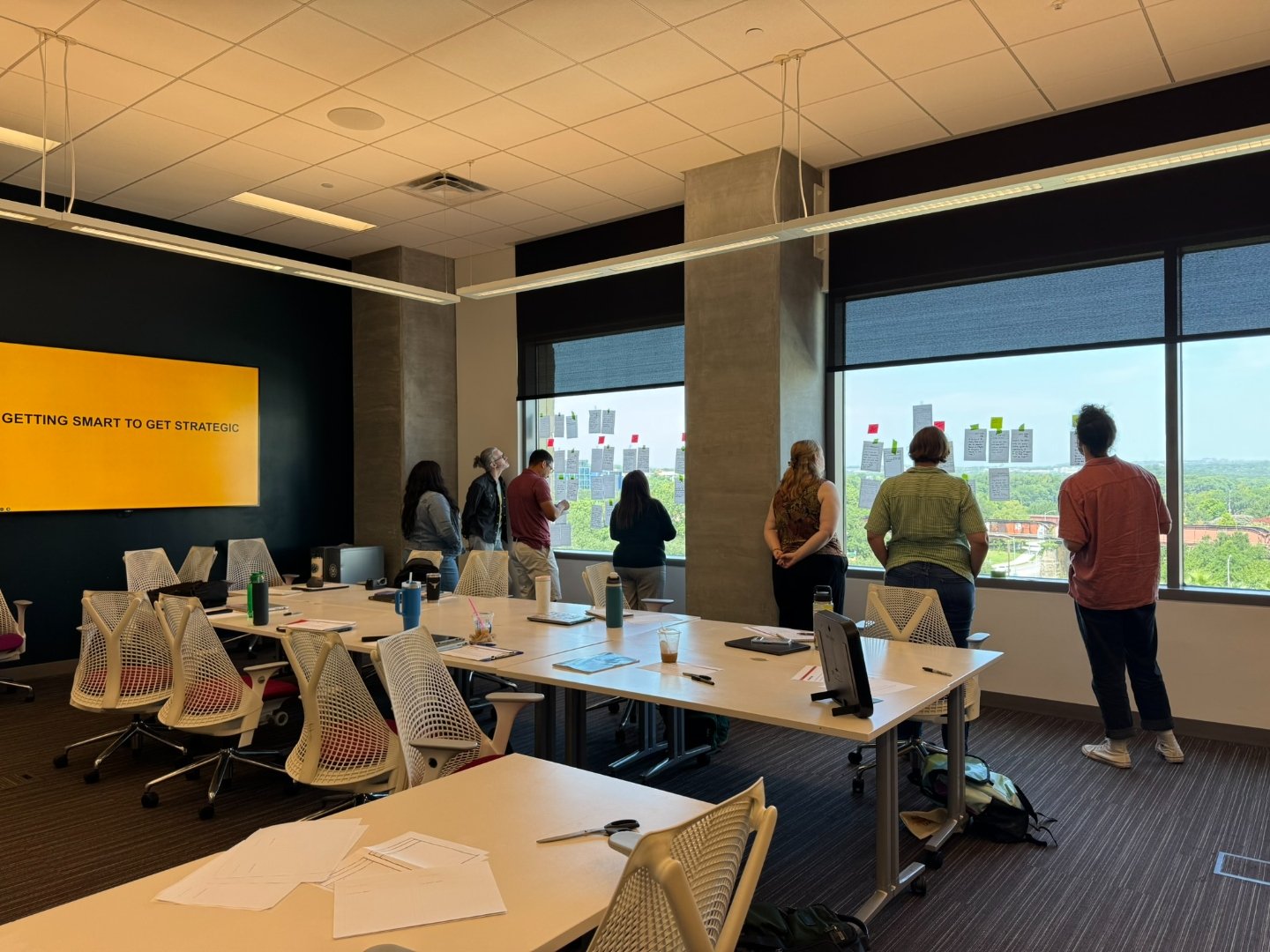
Back at my job, the cafetorium mindset was so valuable in our team's offsite and in designing cross-functional team sprints.
Building New Cafetoriums
The Summer Studio taught me that the best creative spaces are like cafetoriums: flexible, multifunctional, and filled with possibility. They're places where you can eat together, rehearse your presentations, critique work in progress, and occasionally "add a little bit of theatre" to your design work. Most importantly, they're spaces you can rearrange to meet the needs of the moment.
Now, months later, I find myself building my own cafetoriums for projects—spaces that feed creative teams while inviting them to step on stage, take risks, grow, and at the end of the day, have some damn fun.