
Humans of The Summer Studio: Tiffany
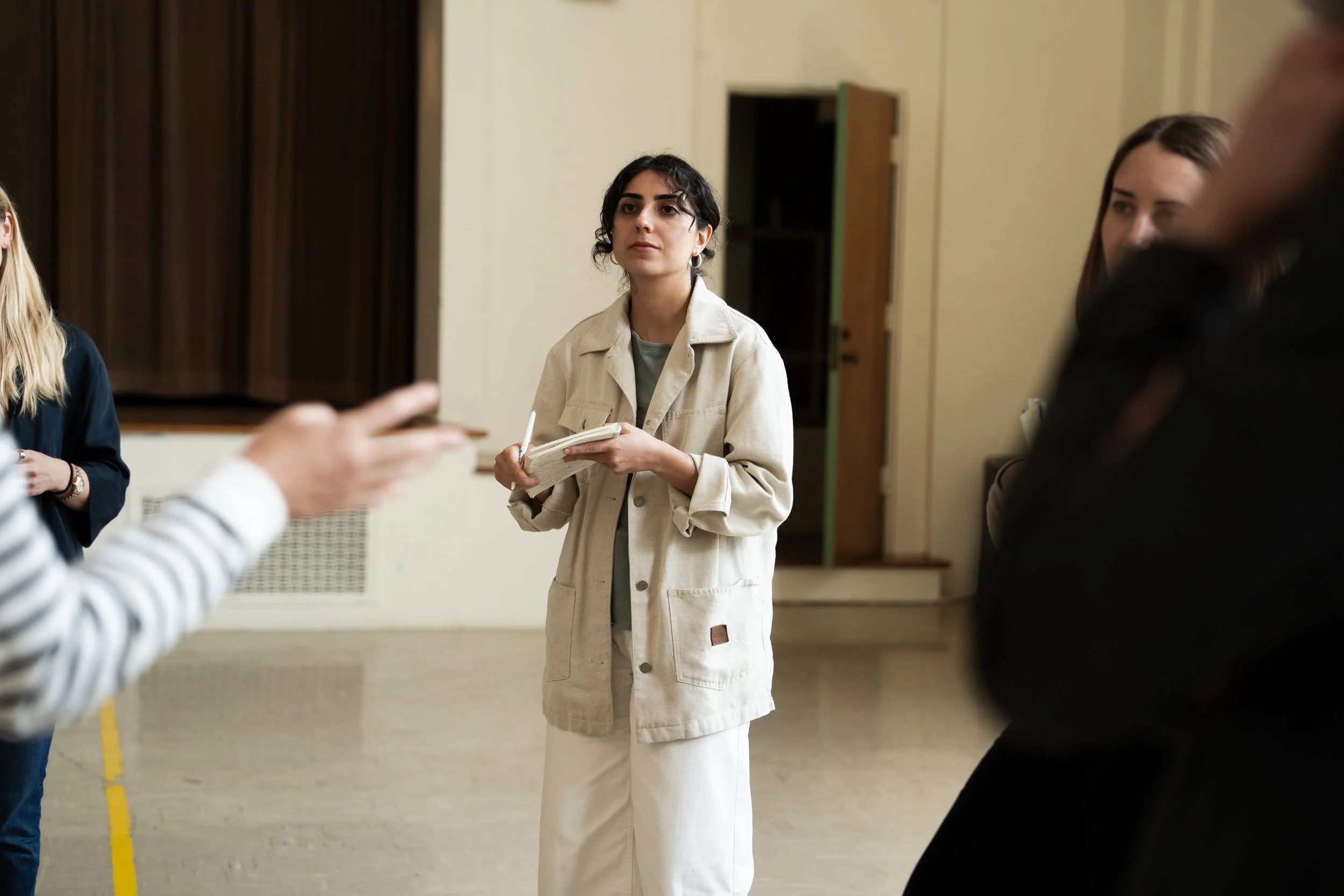
Meet Tiffany
New drop in our latest Humans of The Summer Studio series- 2025 Edition: Tiffany!
Tiffany is a Senior Designer at Civilla, where she focuses on understanding people’s needs through research and using those insights to improve complex public systems. Tiffany has been a key contributor to Civilla’s health and human services work in Missouri and Washington, helping redesign benefits applications, renewals, and correspondence. Civilla recognized that Tiffany is on the rise and invested in her by sending her to The Summer Studio alongside a colleague, creating a shared learning experience they could bring back to the same organization. Tiffany’s optimism and warmth are matched by a steadfast pursuit of what is real and right, and she brought that combination to many of the Studio’s most important moments.
Read more of her story below.
What a dream to be thinking back on The Summer Studio during single digit Detroit winter weather. I first heard about TSS from my manager at the time, who shared the opportunity with me and a teammate, noting it could be a good fit given our shared curiosity about what growth into leadership roles might look like. Coming into design by way of the applied social science world, I was unsure how I would fare in a more designer-centric environment. As I looked through materials from a prior Summer Studio cohort, I found myself wondering if I could do it. If I’d be able to meaningfully contribute to work with strangers on a project I did not yet have much context around and in such a short amount of time. I had no clue, but I did know I wanted to find out.
With all those questions in mind, it’s no surprise that the moment that stands out most to me was when our team of Fellows fell into a natural working rhythm together. When I moved from having my own internal experience at TSS to a collective one. We were in the cafetorium of the Baker Center, looking at our many post-its of observations up on the board and we just dove into synthesis– noting what felt similar and different, building on each other's ideas, taking steps forward and back. It was a moment I felt most in sync, comfortable, and energized. We were arriving at a shared understanding of a design problem and finding clarity together. A true “mind melding” moment.
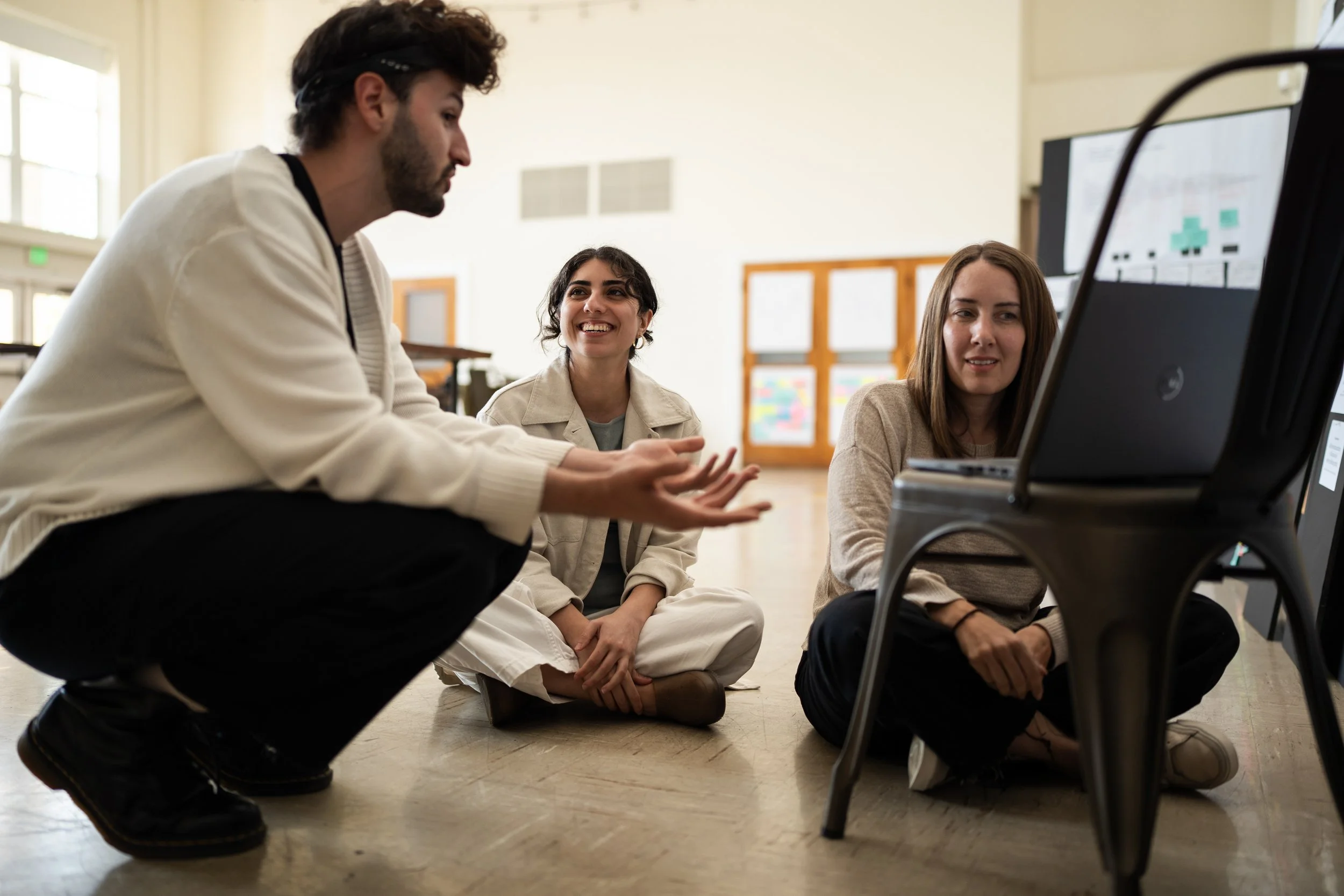
Tiffany and other Fellows writing test copy for prototypes
When you’re experiencing a moment like this, it’s easy to think of it as a stroke of luck or even some special alchemy that comes from having the right group of people together in the room, but I came to understand that our ability to work together so seamlessly was carefully and intentionally cultivated. We were ushered into that moment without realizing it. Practices like “Overnight Mail,” while not directly related to our project, helped us get comfortable sharing our messy, first-thing-in-morning thinking. Giving each other feedback on our “Tell Me About Yourself” intros helped us practice opening ourselves up to other suggestions and points of view. Small acts of vulnerability, paired with an environment where all attempts were valued as part of the learning process, laid the foundation for strong collaboration.
One of my biggest takeaways from TSS was a deeper appreciation for this kind of facilitation. I learned not just by observing great facilitators in Kate, Gray, Kelcey, and Jon, but by talking openly about what they were doing, why they were doing it, and how they chose to do it. While they all guided us through activities and helped set the conditions for working well together, each of them had a distinct and authentic way of showing up that invited me to think about what my own leadership style might look like.
Maybe it was inspired by the cafetorium itself, a space that has undoubtedly housed many a childhood performance, but TSS felt like a look behind the curtain. I came to see leadership as both a practice and a presence. Practice shows up in the choices you make, how you read the energy in the room, knowing when to intervene or step back, and having tools to support a team when they are stuck. Presence, on the other hand, comes through in how you show up, staying grounded, flexible, and buoyant in ways that create space for others to collaborate.

Tiffany and Fellows outside the studio during the “leadership layer” break
Since returning to my work, I’ve carried these lessons with me. For meetings or work I’m leading, I more consistently ask myself what structures could help people step into design work together and what conditions would help them do it well and with ease. I started mapping out leadership dimensions and descriptions for what those could look like at different levels of proficiency to help support my own growth as I continue to practice these skills and get a better sense of what leadership looks like in my role.
For those considering a future cohort, my advice would be to jump on it! The value of TSS is not only in the work you produce in collaboration with an incredible client and group of designers, but in the care and intention behind how the experience is designed and in your willingness to fully engage with it.